
Top 3 Dealer Trends for 2026 You Can Act on Today
The industry is changing in visible ways. Battery equipment is expanding. Customer expectations are rising. Manufacturer strategies are evolving. Dealers who understand these shifts can plan with clarity and confidence.
Here are three major trends to watch in 2026 and practical strategies to manage each one.
Trend 1: The emergence of battery power equipment
Battery equipment is no longer a small category. It continues to grow especially in residential and light duty segments. Many homeowners are choosing battery tools for convenience and lower maintenance. Seasonal products such as snowblowers and handheld tools are often the first step into battery ownership.
Commercial adoption is happening more slowly. Landscape crews and contractors continue to evaluate runtime, charging logistics and overall performance before converting fleets. At the same time, municipalities and public institutions are increasing battery requirements in bids, which is accelerating adoption in specific regions.
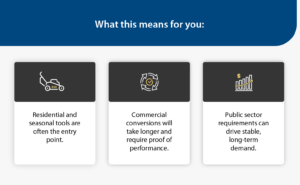
What this means for you:
- Residential and seasonal tools are often the entry point.
- Commercial conversions will take longer and require proof of performance.
- Public sector requirements can drive stable, long-term demand.
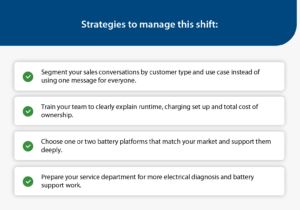
Strategies to manage this shift:
- Segment your sales conversations by customer type and use case instead of using one message for everyone.
- Train your team to clearly explain runtime, charging set up and total cost of ownership.
- Choose one or two battery platforms that match your market and support them deeply.
- Prepare your service department for more electrical diagnosis and battery support work.
Trend 2: Customer experience is the competitive advantage
Products are evolving but the customer experience is becoming the real differentiator. Industry reporting continues to show that dealers who respond quickly to online and phone inquiries outperform competitors. Customers expect guidance, speed and expertise.
Strong dealerships are built around their communities. They host demos, answer questions clearly and support customers after the sale. The position themselves as partners, not just retailers.
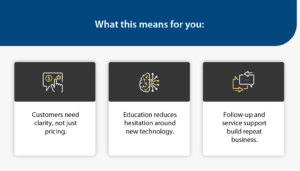
What this means for you:
- Customers need clarity, not just pricing.
- Education reduces hesitation around new technology.
- Follow-up and service support build repeat business.
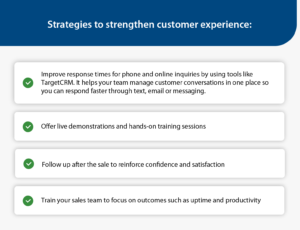
Strategies to strengthen customer experience:
- Improve response times for phone and online inquiries by using tools like TargetCRM. It helps your team manage customer conversations in one place so you can respond faster through text, email or messaging.
- Offer live demonstrations and hands-on training sessions
- Follow up after the sale to reinforce confidence and satisfaction
- Train your sales team to focus on outcomes such as uptime and productivity
Trend 3: Manufacturer and channel alignment is critical
Sales performance across the industry has been mixed. Some categories show growth while others remain soft. Inventory pressure and margin compression continue to affect many dealers. This environment increases the risk of carrying too much inventory or too many brands.
Manufacturers are investing heavily in electrification, automation and new platforms. Dealers must decide where to align and how to manage inventory carefully. Alignment with the right manufacturers can improve training access, parts availability and long-term support.
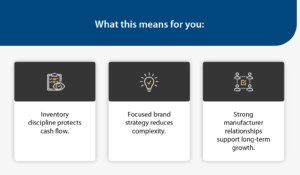
What this means for you:
- Inventory discipline protects cash flow.
- Focused brand strategy reduces complexity.
- Strong manufacturer relationships support long-term growth.
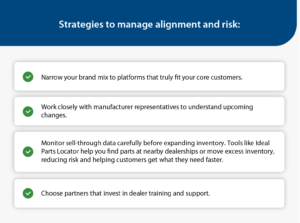
Strategies to manage alignment and risk:
- Narrow your brand mix to platforms that truly fit your core customers.
- Work closely with manufacturer representatives to understand upcoming changes.
- Monitor sell-through data carefully before expanding inventory. Tools like Ideal Parts Locator help you find parts at nearby dealerships or move excess inventory, reducing risk and helping customers get what they need faster.
- Choose partners that invest in dealer training and support.
Battery equipment is expanding. Customers expect better service and guidance. Manufacturers strategies are evolving. These are structural shifts, not temporary cycles. Dealers who adapt their inventory, service models, pricing strategies and customer engagement will grow. Planning now will position your dealership for a stronger 2026.