Surviving the Cash Flow Rollercoaster

If there is one thing we all recognize in this business, it is that cash flow rarely moves in a straight line. Peaks feel great. Valleys feel stressful. And too often, the difference between a strong dealership and one that struggles is not profitability, but timing.
During a recent Dealer’s Edge conversation, we spent time digging into why cash flow continues to be one of the biggest pressure points for OPE dealers and what we can actually do about it. These are the key ideas worth taking back to your dealership and putting into action.
Profit does not equal cash in the bank
Most dealerships do not fail because they are unprofitable. They fail because they run out of cash at the wrong time. In a seasonal business like ours, revenue can swing by 30 to 60 percent from month to month, while expenses stay largely fixed. Payroll, rent, insurance, utilities, technology costs and floor plan interest do not take a break just because sales slow down.
If we only look at annual profit and not monthly cash flow, we miss the real risk. The question is not “Did we make money last year?” The real question is “Can we survive our weakest months without panic decisions?”
Plan for the slow season before it shows up
Waiting for the slow season to arrive before reacting is one of the most common mistakes we see. Cash planning needs to start months earlier.
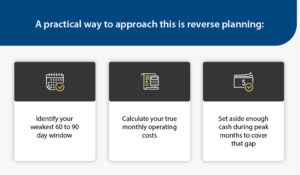
A practical way to approach this is reverse planning:
- Identify your weakest 60 to 90 day window
- Calculate your true monthly operating costs
- Set aside enough cash during peak months to cover that gap
A healthy target discussed was three to six months of operating expenses in reserve. Not because things will always go wrong, but because eventually something will. Weather, interest rates, the economy or inventory delays all show up when we least expect them.
Absorption is the safety net most dealers underuse
Absorption came up repeatedly, and for good reason. Absorption tells us whether the gross profit from service, parts and rental can cover total dealership expenses. When absorption is strong, equipment sales become upside rather than survival.
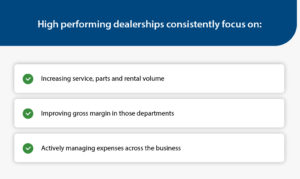
High performing dealerships consistently focus on:
- Increasing service, parts and rental volume
- Improving gross margin in those departments
- Actively managing expenses across the business
Dealers with higher absorption also tend to see stronger return on assets, which means the business itself becomes more valuable and more resilient.
Predictable revenue beats hoping for equipment sales
Relying solely on equipment sales is risky. Even when trends look good, customer behavior can change quickly due to weather, financing conditions, or price sensitivity.
What stabilizes cash flow is predictable revenue. Service, parts and rental typically carry higher margins and occur more consistently throughout the year. That predictability matters more than volume alone.
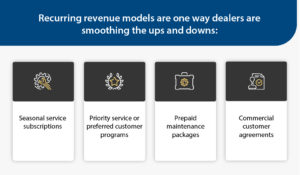
Recurring revenue models are one way dealers are smoothing the ups and downs:
- Seasonal service subscriptions
- Priority service or preferred customer programs
- Prepaid maintenance packages
- Commercial customer agreements
Even modest monthly fees add up when applied across hundreds of customers and provide cash flow when sales slow.
Inventory and interest quietly drain cash
Inventory sitting too long is one of the fastest ways to erode cash flow. Floor plan interest does not just reduce margin, it compounds pressure month after month. Several dealers shared that once interest starts being paid on inventory, that margin is effectively gone for good.
Strong dealers stay aggressive about inventory movement:
- Tracking aged units weekly
- Trading inventory with other dealers
- Bundling service or incentives to move slow movers
- Prioritizing cash in the bank over iron on the floor
Cash gives you options. Inventory does not.
Staffing decisions have year-round consequences
Payroll is one of the largest fixed costs we carry. Overstaffing without productivity expectations drains cash quickly, especially during slower months. At the same time, reactive layoffs can damage long term capacity and morale.
The most effective dealers plan staffing levels around seasonality and productivity, not just optimism. The goal is consistency rather than extremes.
Charging for value is no longer optional
Another strong theme was the shift away from “free by default.” Dealers discussed charging for pre-delivery inspection, setup, pickup and delivery, priority service and membership style benefits. When framed correctly, customers are far more accepting than we often expect.
The key is clarity:
- Be transparent about what the customer gets
- Tie fees to real benefits and peace of mind
- Protect technician time and efficiency
Charging for value is not about squeezing customers. It is about building a sustainable business that can serve them long term.
Discipline beats hope every time
Across the conversation, one thing was clear. The dealers who navigate the cash flow rollercoaster best are not lucky. They are disciplined. They forecast. They review reports. They move inventory. They protect margin. They plan for slow months while business is good.
Cash flow challenges are not going away. Seasonality is part of this industry. But with the right habits, tools and mindset, it does not have to control the business.
Thank you to everyone who joined this Dealer’s Edge conversation and shared what is happening inside their dealerships. These sessions work because dealers are willing to talk openly about the realities of running a business in the OPE industry.
Dealer’s Edge meets every second Friday of the month at 11 am ET. It brings dealers together to talk through the challenges, opportunities, and decisions that shape our businesses. Topics include sales, service, operations, staffing, and growth.
If you want to learn from peers, share practical ideas, and take part in honest conversations that move the industry forward, join us.